Are Wahuda Jointers Worth it in 2026? Complete Buyer Guide
Are Wahuda jointers any good for those who want smooth edges without industrial-sized machines?
Many people struggle with bowed boards, rough edges, and wasted lumber during early project stages. These problems worsen when jointers lack power, precision, or consistent cutting performance. Wahuda jointers aim to solve these frustrations using compact designs and spiral cutterhead technology. However, not every benchtop jointer delivers long-term value or reliable accuracy.
This guide breaks down Wahuda jointers in detail, covering features, performance, pros, cons, and comparisons. By the end, you will know whether a Wahuda jointer fits your workshop, skill level, and goals.
What Are Wahuda Tools?
Wahuda Tools focuses on compact machines designed for precision-focused home workshops. The brand emphasizes efficient designs that balance performance, affordability, and long-term usability.
Brand overview
- Specializes in benchtop jointers and planers
- Targets hobbyists, builders, and small professional shops
- Known for spiral cutterhead-equipped machines
- Focuses on precision, surface finish, and low-maintenance ownership
Overview of Wahuda Jointers
Wahuda jointers are engineered to deliver accurate edge jointing with minimal setup complexity.
Their designs prioritize space efficiency while maintaining consistent cutting performance for everyday tasks.
General characteristics
- Compact footprint for small workshops
- Operates on standard 120V U.S. household power
- Designed for boards within moderate width limitations
- Emphasizes accuracy over high-volume production
Popular Wahuda Jointer Models
1) Wahuda 6-Inch Benchtop Jointer
The Wahuda 6-inch benchtop jointer is designed for those who need precision in limited spaces. It delivers consistent edge jointing performance without the size or cost of floor-standing machines. This jointer uses a spiral cutterhead system to produce smoother cuts on hardwoods and softwoods. Its compact benchtop design makes it ideal for garages, basements, and small workshops.
Wahuda engineered this model to balance accuracy, portability, and long-term reliability.The machine runs on standard 120V household power, eliminating special electrical requirements. It excels at flattening board faces and squaring edges before planing or final assembly. This jointer targets serious users seeking professional-quality finishes without industrial complexity.
Key Features
- 6-inch maximum cutting width for common stock
- Spiral cutterhead with multiple carbide insert cutters
- Precision-machined aluminum infeed and outfeed tables
- Adjustable aluminum fence with positive stops
- Smooth depth-of-cut adjustment for controlled material removal
- Compact footprint suitable for benchtop or stand mounting
- Standard 120V motor for U.S. home workshops
Pros
- Produces exceptionally smooth finishes with reduced tear-out
- Spiral cutterhead significantly lowers operating noise levels
- Carbide inserts last longer than traditional straight knives
- Compact size fits easily into small workshop layouts
- Simple maintenance with individually replaceable cutter inserts
Cons
- Limited cutting width restricts wider board processing
- Aluminum tables provide less mass than cast-iron alternatives
- Not designed for continuous commercial or production use
2) Wahuda 8-Inch Benchtop Jointer
The Wahuda 8-inch benchtop jointer is built for handling wider stock with precision demands. It offers increased jointing capacity while maintaining a compact, workshop-friendly footprint. This model features Wahuda’s spiral cutterhead design for smoother cuts and reduced tear-out. The wider cutting width makes it suitable for furniture panels and larger hardwood boards.
Despite its size, the jointer remains manageable for small professional or advanced workshops. It operates on standard 120V power, avoiding costly electrical upgrades. Wahuda designed this jointer for users who outgrow 6-inch capacity limitations. It bridges the gap between benchtop convenience and near-professional performance expectations.
Key Features
- 8-inch maximum cutting width for wider boards
- Spiral cutterhead with indexable carbide inserts
- Precision-machined aluminum tables for smooth material feeding
- Heavy-duty adjustable fence with bevel support
- User-friendly depth-of-cut control system
- Compact benchtop design compared to floor-standing jointers
- Standard 120V operation for U.S. workshops
Pros
- Handles wider lumber than typical benchtop jointers
- Produces cleaner finishes with minimal grain tear-out
- Spiral cutterhead reduces noise and vibration levels
- Lower maintenance costs compared to straight-knife systems
- Suitable upgrade path for advancing workers
Cons
- Larger size requires more bench or stand stability
- Aluminum tables still lack cast-iron mass
- Higher price point than 6-inch benchtop alternatives
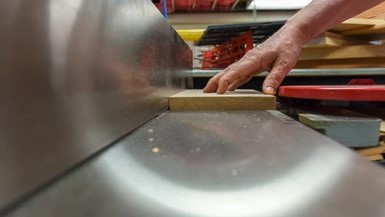
Wahuda 6-Inch vs 8-Inch Jointers
| Feature | Wahuda 6-Inch Jointer | Wahuda 8-Inch Jointer |
| Cutting Width | Up to 6 inches | Up to 8 inches |
| Best For | Small projects, beginners | Furniture, wider stock |
| Space Requirement | Minimal | Moderate |
| Power Source | 120V | 120V |
| Upgrade Potential | Limited | Strong |
Cutterhead Technology Explained
Wahuda jointers use spiral cutterheads instead of traditional straight knives.
Benefits of spiral cutterheads
- Reduced tear-out on figured or hardwood lumber
- Lower noise levels during operation
- Longer cutter life due to rotatable carbide inserts
- Consistent cutting quality across the board width
Table Construction and Fence Design
Table Design
- Made from precision-machined aluminum
- Lightweight for portability
- Smooth surface for easy board feeding
Limitations
- Less mass than cast iron
- Slightly higher vibration under aggressive cuts
Fence System
- Adjustable aluminum fence
- Supports bevel cuts for joinery
- Requires careful initial calibration
Performance and Accuracy in Real Use
Wahuda jointers perform best when users follow conservative cutting practices.
Performance highlights
- Smooth edge jointing on hardwoods and softwoods
- Minimal snipe when feed pressure remains consistent
- Reliable accuracy after proper setup
Best practices
- Take shallow passes
- Secure jointer firmly to a stable surface
- Regularly check fence alignment
Noise Levels and Workshop Comfort
Spiral cutterheads significantly reduce operational noise.
User benefits
- More comfortable indoor workshop use
- Reduced hearing fatigue
- Better experience in shared residential spaces
Wahuda Jointers vs Other Benchtop Jointers
| Feature | Wahuda Jointers | Standard Benchtop Jointers |
| Cutterhead | Spiral carbide inserts | Straight steel knives |
| Noise Level | Low | High |
| Surface Finish | Excellent | Moderate |
| Maintenance | Low | Higher |
| Target User | Homeowners, craftsmen | Entry-level |
For a head-to-head breakdown, see our WEN vs. Wahuda jointer comparison.
Who should buy Wahuda Jointers?
Wahuda jointers are ideal for:
- Furniture builders
- Small-space workshop owners
- Beginners learning edge jointing techniques
- Workers prioritizing clean finishes
Availability and Support in the USA
Wahuda jointers are actively sold and supported within the United States.
Where to buy?
Wahuda Tools
- U.S. online retailers like Amazon
Support availability
- U.S.-based customer service
- Replacement parts and cutter inserts
- Digital manuals and setup guides
This accessibility improves buyer confidence and long-term usability.
Maintenance and Long-Term Reliability
Routine maintenance keeps Wahuda jointers performing accurately.
Recommended maintenance steps
- Clean tables after every session
- Rotate carbide inserts periodically
- Check fence squareness monthly
- Inspect fasteners for vibration loosening
Craftsmen planning upgrades should review this 8 or 12 inch jointer guide for long-term decisions.
Conclusion
Wahuda jointers are a strong choice for U.S. craftsmen seeking precision without industrial bulk. Both the 6-inch and 8-inch models deliver smooth finishes through spiral cutterhead technology. They perform exceptionally well in small workshops where space, noise, and maintenance matter. While aluminum tables limit heavy-duty production use, accuracy remains consistently reliable. These jointers reward careful setup and conservative cutting techniques.For advancing woodworkers, Wahuda jointers offer excellent long-term value.
If your projects demand clean edges, reduced tear-out, and compact efficiency, Wahuda jointers are worth serious consideration.
FAQs
1) Are Wahuda jointers any good for beginners?
Yes, Wahuda jointers are beginner-friendly due to their compact size, simple setup, and smooth cutting performance.
2) Do Wahuda jointers use spiral cutterheads?
Yes, most Wahuda jointers feature spiral cutterheads with indexable carbide inserts for cleaner cuts.
3) Are Wahuda jointers loud during operation?
Wahuda jointers operate quieter than straight-knife models because spiral cutterheads reduce cutting noise.
4) Can Wahuda jointers handle hardwoods?
Yes, Wahuda jointers handle hardwoods effectively when using shallow passes and proper feed techniques.
5)Do Wahuda jointers require special electrical wiring?
No, Wahuda jointers run on standard 120V household power in U.S. workshops.
6) How often should carbide inserts be replaced?
Carbide inserts should be rotated or replaced when edges dull, typically after extended use.