Are Ryobi Planers Good? [2026]
Are Ryobi planers good enough to deliver smooth boards without forcing you into higher pricing?
Many workers face rough lumber, uneven thickness, and wasted materials due to poor planer choices. Cheap machines disappoint, while premium models often exceed actual project requirements. This gap frustrates beginners and homeowners trying to balance cost and performance. Ryobi planers aim to solve this problem by offering affordable, accessible thickness planers for light project needs. This in-depth review breaks down Ryobi planer performance, features, durability, limitations, and comparisons. By the end, you will know exactly whether a Ryobi planer belongs in your workshop.
Ryobi Brand Overview
Ryobi is a well-known power tool brand targeting homeowners and hobby workers.
The brand operates under Techtronic Industries (TTI), a global manufacturer of power equipment.
Key Brand Facts
- Parent company: Techtronic Industries (TTI)
- Primary U.S. retailer: The Home Depot (exclusive)
- Target audience: Homeowners and light workshop owners
- Warranty coverage: 3-year limited warranty
Types of Ryobi Planers
Ryobi focuses exclusively on portable benchtop thickness planers for residential workshops.
These machines are designed for convenience, storage efficiency, and simple operation.
General Ryobi Planer Characteristics
- Benchtop, portable construction
- Average 13-inch planing capacity
- Universal motor systems
- Disposable dual-edge blade design
- Shop-vac-compatible dust ports
Popular Ryobi Planer Models
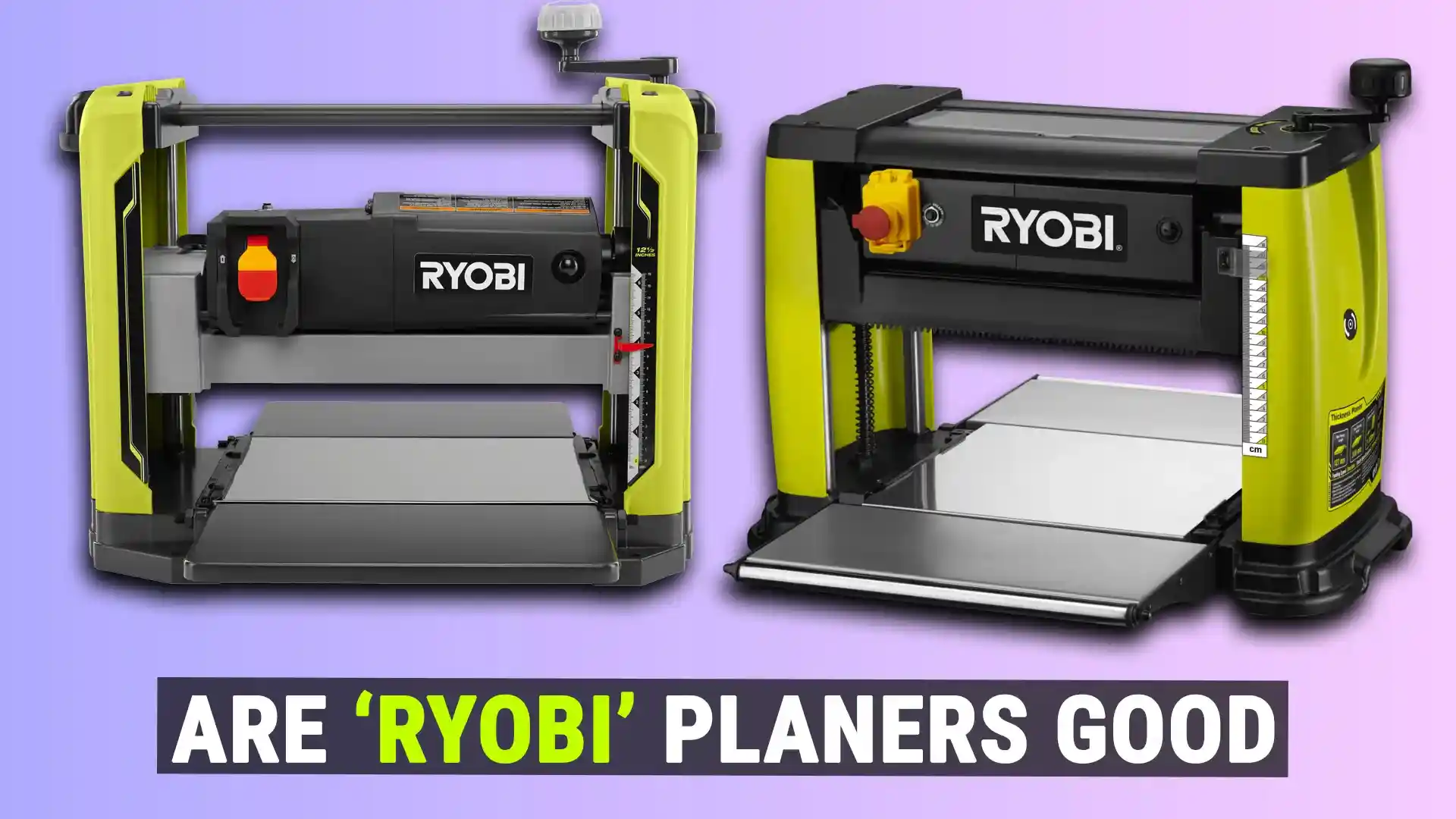
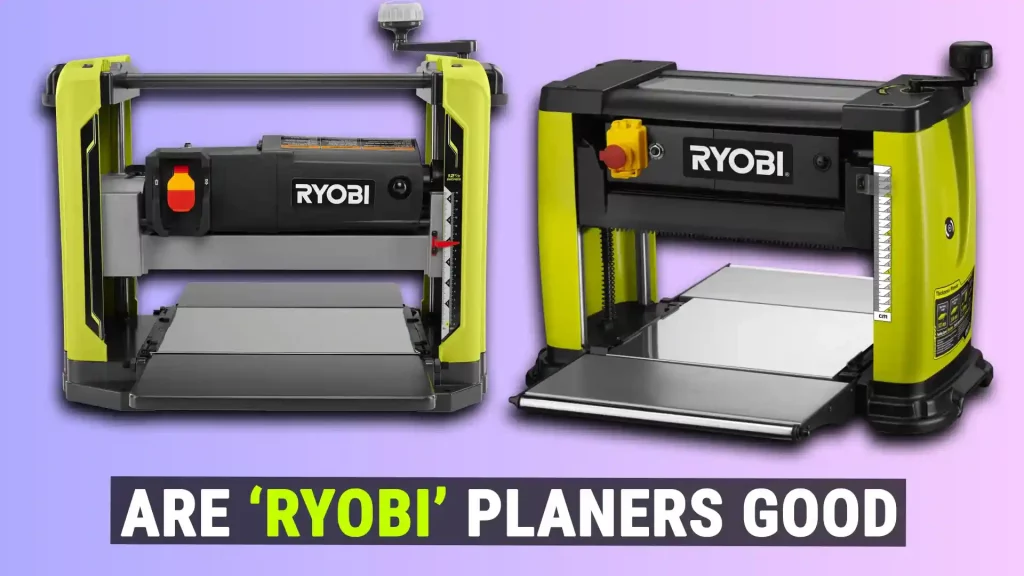
1) Ryobi 13-Inch Thickness Planer
The Ryobi 13-inch thickness planer is designed for smoothing and leveling lumber efficiently.
It targets homeowners working on furniture repairs, shelving, and home improvement projects.
Key Features
- 13-inch maximum cutting width
- Powerful 15-amp universal motor
- Dual-edge disposable blades
- Depth adjustment knob with measurement scale
- Integrated dust exhaust port
Pros
- Affordable price point compared to competitors
- Lightweight design improves portability and storage
- Easy blade replacement system for beginners
- Widely available replacement parts in the U.S.
Cons
- Louder than professional-grade planers
- Limited performance on dense hardwoods
- Plastic housing reduces long-term durability
2) Ryobi 10-Inch Portable Planer (Model RIPP120)
The Ryobi 10-inch portable planer is a compact, lightweight option ideal for small boards and tighter shop spaces, offering nimble performance for basic wood prep.
Key Features
- 10-inch maximum planing width
- Lightweight and portable for easy storage
- 12-amp motor with smooth feed rollers
- Disposable blade system simplifies maintenance
- Dust port compatible with standard shop vacuums
Pros
- Highly portable and easy to set up
- Great choice for quick board leveling
- Lower price point than larger planers
- User-friendly depth adjustment
Cons
- Best suited to softwoods and smaller projects
- Limited width for wider boards
- Less powerful on thick cuts
Build Quality and Design
Ryobi planers prioritize weight reduction and ease of transport over industrial durability.
The housing uses reinforced plastic, while internal components remain metal-based.
Design Highlights
- Compact footprint for small garages and sheds
- Non-slip rubber feet improve bench stability
- Simple control layout reduces learning curve
Design Limitations
- Plastic casing transmits vibration at higher loads
- Feed rollers lose grip on warped hardwood boards
Performance: Are Ryobi Planers Good for Real Projects?
Ryobi planers deliver consistent results when used within recommended material limits.
They perform best with shallow cuts and steady feed speeds.
Materials That Perform Well
- Pine
- Cedar
- Fir
- Poplar
- Soft maple
Materials That Require Caution
- Oak
- Hickory
- Walnut
- Exotic hardwoods
Performance Tips
- Take light passes under 1/16-inch depth
- Support long boards to reduce snipe
- Keep blades sharp for cleaner finishes,learn more about blade longevity in our guide on How Long Do Planer Blades Last?
Motor Power and Noise Levels
Ryobi planers use high-speed universal motors common in portable equipment. These motors provide sufficient torque but generate noticeable operating noise.
Motor Characteristics
- Approximate power rating: 15 amps
- Capable of continuous short-duration use
- Best suited for intermittent workloads
Craftsmen deciding between power options can read our guide on corded vs cordless planers to choose the best fit for their workshop.
Noise Considerations
- Hearing protection strongly recommended
- Not ideal for noise-sensitive environments
- Louder than induction-motor planers
Ease of Use and Maintenance
Ryobi planers are intentionally designed for first-time planer users. Maintenance tasks require minimal mechanical knowledge.
User-Friendly Features
- Tool-free blade alignment system
- Clearly marked depth gauge
- Accessible dust port for fast cleanup
Maintenance Requirements
- Regular blade inspections
- Occasional roller cleaning
- Periodic calibration checks
Ryobi Planers vs Competitors
Ryobi vs DeWalt Benchtop Planers
| Feature | Ryobi Planer | DeWalt DW735 |
| Target User | Homeowners | Professionals |
| Price Range | Budget | Premium |
| Motor Type | Universal | Universal |
| Finish Quality | Good | Excellent |
| Durability | Moderate | High |
Who Should Buy a Ryobi Planer?
Ryobi planers are ideal for users seeking functionality without professional-level investment.
Best Fit For
- Homeowners
- Craftsmen
- Beginners learning planer fundamentals
- Small-space workshops
Not Recommended For
- Commercial furniture production
- Daily hardwood milling
- Precision cabinetry businesses
Warranty
Ryobi offers a 3-year limited warranty on planers purchased in the United States. Warranty processing is handled through Home Depot service centers.
Support Advantages
- Nationwide retail footprint
- Easy access to replacement blades
- Consistent customer service channels
Accessories & Attachments
- Planer blades – Ryobi offers a wide range of replacement blades for its planers that allow you to easily switch out worn-out blades for new ones. This helps ensure that you always have a sharp blade ready when you need it.
- Planer guards – These guards help protect your hands from accidental contact with the blades while using your Ryobi planer.
- Dust collection systems – These systems allow you to quickly and efficiently capture as much dust as possible while you work, making cleanup a breeze.
- Other attachments – There are also various other attachments available for Ryobi planers such as sanding pads and edge guides. These can be invaluable in helping you achieve precise results with your projects.
Safety Tips for Using Ryobi Planers
Safe operation protects both the user and the machine.
Essential Safety Practices
- Always wear eye and hearing protection
- Avoid feeding warped or twisted boards
- Keep hands away from infeed and outfeed zones
- Disconnect power before blade maintenance
Conclusion
Ryobi planers are a solid choice for homeowners, and beginners seeking reliable performance at an affordable price. They handle softwoods and light hardwood tasks effectively when users apply shallow, controlled passes. While these planers cannot match professional-grade durability, they excel in portability, ease of use, and accessibility across the United States. Backed by Home Depot’s nationwide support and a three-year warranty, Ryobi planers offer dependable value for casual woodworking projects. If your needs remain occasional and budget-conscious, Ryobi planers represent a practical, confidence-building investment.
FAQs
1) Are Ryobi planers good for beginners?
Yes, Ryobi planers are beginner-friendly due to simple controls, light weight, and affordable pricing.
2) Can Ryobi planers handle hardwood?
Ryobi planers can handle light hardwoods with shallow passes but struggle with dense hardwoods.
3) Do Ryobi planers produce snipe?
Ryobi planers may produce minor snipe, which proper board support can significantly reduce.
4) How long do Ryobi planer blades last?
Ryobi planer blades typically last several months under normal use.
5) Are Ryobi planers loud?
Yes, Ryobi planers are loud due to universal motors, so hearing protection is recommended.