
Are Makita Tools Good? Honest Brand Review for Pros and Woodworkers
Affiliate disclosure: This article contains Amazon affiliate links. If you buy through them, we earn a small commission at no extra cost to you. Our recommendations mirror real-world professional use and documented user feedback.
The Verdict: ⭐⭐⭐⭐½ (4.5/5)
Yes, Makita tools are good. They are among the top professional power tool brands, offering strong build quality, motor performance, and durability that make their higher price worth it for regular users. While Makita doesn’t outperform DeWalt and Milwaukee in every area, it matches or beats them where it counts for serious users.
Makita’s biggest strength is its light design, comfortable grip, and motor technology that stands up to heavy daily use.
Makita’s main weakness is that it offers fewer specialty tools in the 18V LXT platform compared to Milwaukee’s M18 lineup.
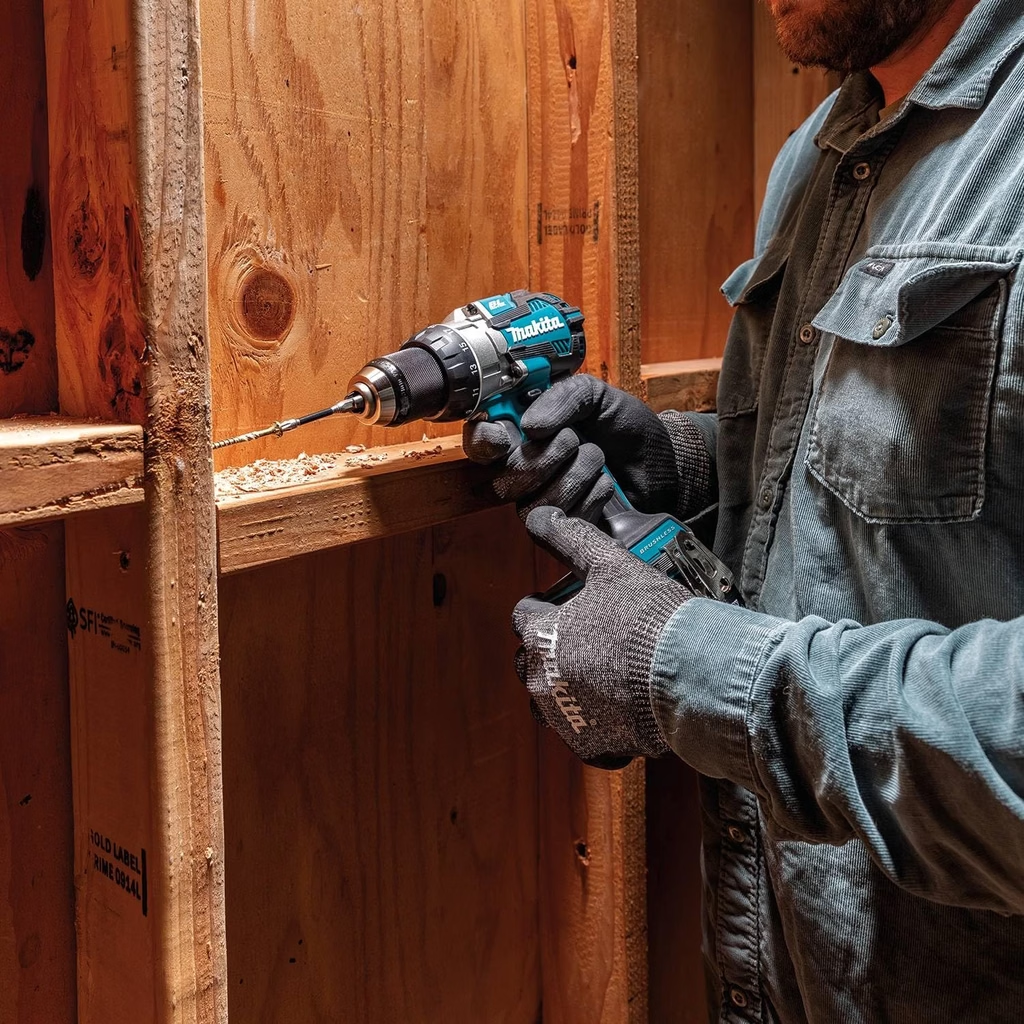
The best Makita tool to start with is the XFD16Z 18V brushless drill/driver. It shows off everything Makita does well in a single tool.
→ Makita XFD16Z Drill/Driver on Amazon
For mechanics and heavy fasteners→ Makita XWT19T Impact Wrench
For concrete and masonry work→ Makita HR2663 Rotary Hammer
For exact cutting→ Makita XVJ05Z Jigsaw
Keep reading for the honest breakdown of what Makita does well, where DeWalt and Milwaukee beat it, and which Makita tools are actually worth buying.
Who Makita Tools Are Really For
Marketing claims aside, Makita has a specific type of ideal user:
Professional trade workers who use tools for more than six hours a day and care about comfort will appreciate Makita. Its light build and comfortable grip really make a difference when you have to hold a drill overhead for hours.
Serious hobbyists and prosumers who want professional quality without extra gimmicks will like Makita. The brand focuses on the basics: power, durability, and comfort.
Workshop owners who want to stick with one battery system will benefit from Makita’s 18V LXT platform, which works with over 300 tools. Once you choose it, the battery compatibility is a big advantage over time.
Finish carpenters and cabinetmakers also favor Makita. Its track saws, jigsaws, and finish nailers are highly regarded in woodworking circles. Makita isn’t the best choice for occasional DIY users who only sand or drill a few times a year. The higher price is really for people who use their tools often. For occasional use, Ryobi or Bauer tools will do the job for much less.ost.
Makita’s History and Reputation
Makita Corporation was founded in Japan in 1915, originally as an electric motor sales and repair company. The company began manufacturing portable electric planers in 1958, which became its foundational product category. It expanded into cordless tools in 1978, becoming one of the earliest pioneers in battery-powered professional tools.
Today, Makita makes tools in Japan, China, Thailand, Romania, Brazil, and the United States. The company is listed on the Tokyo Stock Exchange and brings in about $5 billion a year. This financial strength means you can count on warranty support and long-term battery availability. Makita is especially respected among Japanese automotive workers, European construction pros, and Pacific Northwest woodworkers. In the U.S., Makita goes head-to-head with DeWalt and Milwaukee in the top professional tier.
When comparing heavy-duty jobsite cutting power, check out our detailed head-to-head review of the Milwaukee M18 cordless circular saw vs. DeWalt FlexVolt.
What Makes a Power Tool Brand Actually “Good”?
Before we look at Makita in detail, let’s talk about what really makes a tool good, beyond the marketing. Here are the factors that matter most for professionals:
Motor technology. Brushless motors deliver more power per battery charge, generate less heat, and last significantly longer than brushed motors. Nearly all Makita professional tools now use brushless motors.
Build quality and materials are key. Features like metal gears, tough housings, and good bearings set pro tools apart from consumer ones. Cheaper brands often use lower-quality parts inside.
Battery platform depth matters too. The more tools that use the same battery, the less you spend in the long run.
Service and repair network. Can you get the tool repaired when it fails, at a reasonable cost? Brand support matters for 5-10 year ownership.
Ergonomics matter, too. Things like weight, balance, grip, and vibration control help you work better and lower your risk of injury if you use tools every day.
Warranty terms matter. Not just what’s written, but how easy it is to get service when you need it.
Makita does well in all six areas, and so do DeWalt and Milwaukee. The real differences between these top brands are smaller than their marketing would have you believe.
Makita’s Real Strengths (What They Do Better)
1. Weight and Ergonomics
Makita tools are usually lighter and better balanced than similar DeWalt and Milwaukee models. This isn’t just marketing; it’s a real engineering decision. For people who use tools for long hours, this makes a big difference.
The brushless 18V LXT drill/driver (XFD16Z) is lighter than Milwaukee’s M18 Fuel version but still offers similar torque. Over an eight-hour day, that lighter weight really helps reduce fatigue.
2. Motor Longevity
Makita’s brushless motors have proven to be reliable in real-life use. Many professionals say their Makita motors last more than five years of daily work without needing service. The company’s long history of motor design shows in the quality of their manufacturing.
3. Build Quality Details
Makita pays attention to the small things. The chuck jaws keep aligned, the switches stay tight, and the battery contacts don’t corrode. These details might seem small, but together they make the tool feel high-quality year after year.
4. The 18V LXT Ecosystem
Makita’s 18V LXT platform works with over 300 tools, making it one of the biggest cordless systems out there. Once you choose this battery, you can add many specialty tools without needing new batteries.
5. Precision Tool Lineup
Makita’s track saws, jigsaws, finish nailers, and compound miter saws are highly regarded by woodworkers. These precision tools often beat the competition in finish quality and accuracy.
If you are looking for jobsite dependability and exactness in stock removal, explore our top picks in the best Makita wood planers buying guide.
Makita’s Real Weaknesses (Honest Downsides)
1. Fewer Specialty Tools Than Milwaukee
Milwaukee’s M18 platform has expanded aggressively into specialty trade tools (plumbing, electrical, HVAC-specific equipment). If you work in a specialty trade and need unusual tools, Milwaukee likely has it before Makita does.
2. Battery Platform Complexity
Makita runs multiple battery platforms (18V LXT, 40V XGT, 12V CXT). This can create confusion when buying. Newer users sometimes buy tools from one platform expecting batteries to work with their other Makita tools, only to find they don’t.
3. Premium Pricing
Makita tools usually cost 10-25% more than Ryobi, Bauer, or other budget brands. This higher price makes sense for people who use their tools every day, but it’s a tough sell for those who only use them occasionally.
4. Marketing Hype Can Oversell
Like other top brands, Makita’s marketing sometimes suggests benefits that most users won’t notice. The gap between a good brushless motor and the “best” one is smaller than the ads make it seem.
5. Customer Service Varies by Region
Makita’s service network depends on where you live. In cities, you’ll usually find an authorized service center nearby. In rural areas, you might have to ship your tool for repairs, which can take longer.
Learn more about build quality, blade durability, and cutting accuracy in our detailed guide to Makita planers for woodworking.
Makita vs DeWalt vs Milwaukee
| Feature | Makita 18V LXT | DeWalt 20V MAX | Milwaukee M18 |
|---|---|---|---|
| Weight (typical drill) | Lightest | Heaviest | Middle |
| Motor technology | Brushless, refined | Brushless, powerful | Brushless, aggressive |
| Platform depth | 300+ tools | 250+ tools | 350+ tools |
| Specialty trade tools | Good | Good | Best |
| Woodworking tools | Best | Good | Good |
| Battery technology | Mature LXT | Mature 20V | Mature M18 |
| Price point | Premium | Premium | Premium |
| Service network (US) | Good | Best | Good |
| Warranty | 3 years tools | 3 years tools | 5 years tools |
| Best for | Woodworking, finish trades | General construction | Plumbing, electrical, HVAC |
In short, Makita is best for ergonomics and woodworking. DeWalt stands out for its service network and brand recognition. Milwaukee leads in specialty tool options and longer warranties.
All three brands are solid choices. Your decision should come down to which specialty tools you need and which battery system you want to stick with for the long term.
4 Makita Tools Worth Buying on Amazon
Here are the Makita tools we recommend, based on real-world performance and the value they offer.
Best Overall: Makita XFD16Z 18V Brushless Driver-Drill
Most people should start with the XFD16Z if they’re new to Makita. This brushless drill/driver shows off Makita’s strengths: it’s lightweight, comfortable to use, and the motor lasts through daily work.
Pros
- 18V LXT battery compatibility with 300+ other Makita tools
- Brushless motor for longer runtime and tool life
- Compact, lightweight design reduces fatigue
- Two-speed transmission for drilling and driving flexibility
- Variable speed trigger with excellent control
- All-metal chuck for durability
Cons
- Bare tool only (batteries and charger sold separately)
- Not the maximum-power option in Makita’s lineup (that’s the XFD14)
- Higher price than Ryobi/Bauer equivalents
Who should buy it: Anyone starting on the Makita LXT platform; professionals who prioritize ergonomics; serious hobbyists who do regular drilling and driving.
Best Impact Wrench: Makita XWT19T 1/2″ High-Torque Impact Wrench
If you’re a mechanic, HVAC technician, or often deal with tough fasteners, the XWT19T is recognized as one of the top cordless impact wrenches available. Its high torque makes quick work of lug nuts, rusted bolts, and structural fasteners that other wrenches can’t handle.
Pros
- High torque output (verify current spec on Amazon listing)
- Brushless motor for durability through heavy repeated use
- Electronic controls for exact torque management
- Compact size relative to torque output
- Reverse function for fastener installation
Cons
- Premium price vs mid-tier alternatives
- Heavy in extended use (inherent to high-torque tools)
- Requires high-amp-hour batteries for best runtime (sold separately)
Who should buy it: Automotive mechanics, truck fleet maintenance, HVAC installers, and anyone who regularly removes large fasteners.
Best Rotary Hammer: Makita HR2663 SDS-Plus with Dust Extraction
The HR2663 is a corded SDS-Plus rotary hammer with built-in dust extraction, designed for concrete drilling jobs that must meet OSHA silica dust rules. It’s a tool for professionals, not for DIY projects.
Pros
- SDS-Plus chuck for professional concrete bits
- Integrated dust extraction for OSHA compliance (29 CFR 1926.1153)
- D-handle design for control on vertical surfaces
- Corded power for extended drilling without battery swaps
- Variable speed for different materials
- Three operation modes (rotary, hammer, rotary hammer)
Cons
- Corded (requires power access on jobsite)
- Not suitable for users without dust extraction accessories
- More complex than non-extraction rotary hammers
- Overkill for occasional DIY concrete drilling
Who should buy it: Construction trades that drill concrete regularly, anchor bolt installers, electrical contractors routing conduit through concrete, and anyone whose job sites require silica dust compliance.
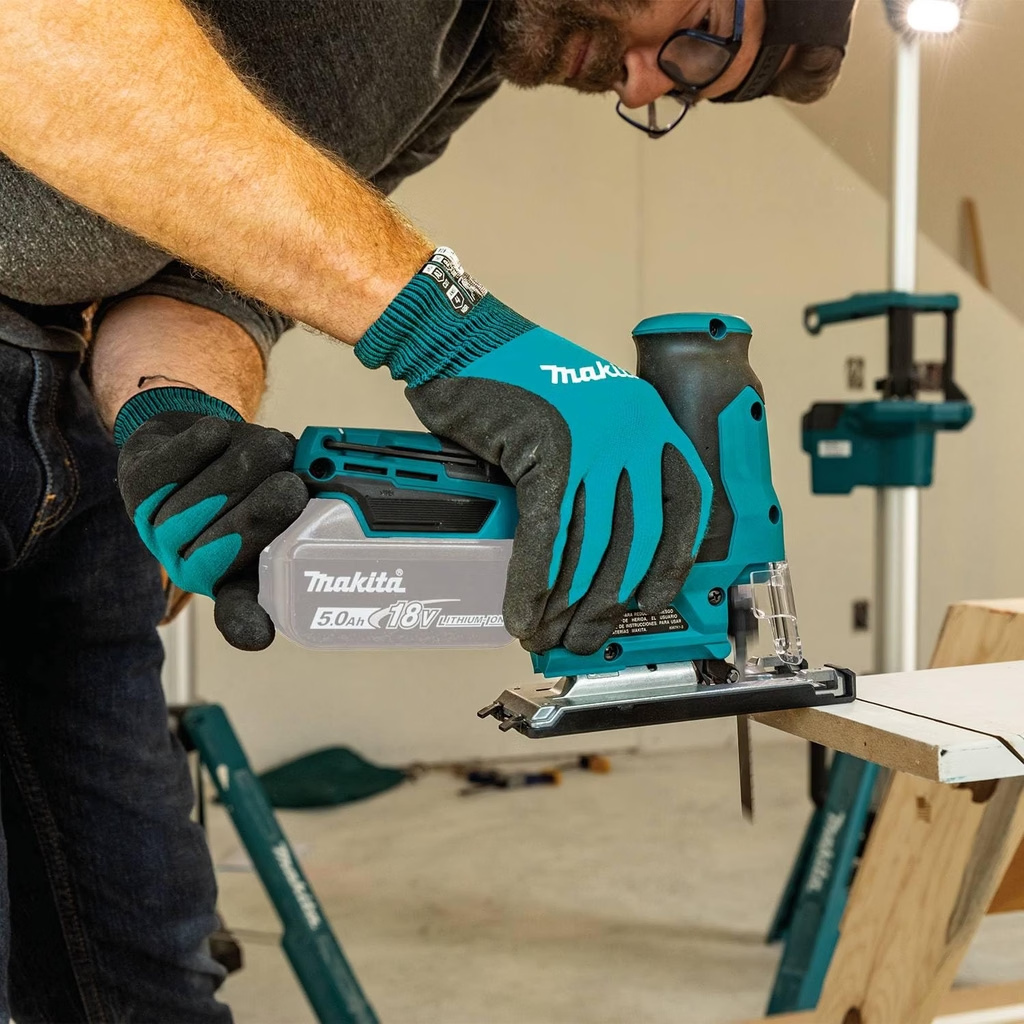
Best Jigsaw: Makita XVJ05Z 18V Brushless Jigsaw
If you need precise cuts in wood, plastics, or thin metals, the XVJ05Z is the best jigsaw in Makita’s current lineup. Its brushless motor keeps power steady at any speed, and this model lives up to Makita’s reputation for accuracy.
Pros
- Brushless motor for extended runtime and tool life
- Variable speed for different materials
- Orbital action settings for aggressive vs precise cuts
- Tool-free blade changes
- LED work light for dark workspaces
- Compact and well-balanced for extended use
Cons
- Bare tool only (batteries and charger sold separately)
- Not the top-of-the-line Makita jigsaw (that’s the XVJ03)
- Dust extraction setup requires additional accessories
Who should buy it: Finish carpenters, cabinet makers, serious DIY users, anyone who needs precise curved cuts regularly.
Makita Warranty and Repair Network
Makita offers a 3-year warranty on cordless tools, 1 year on most corded tools, and 3 years on 18V LXT lithium-ion batteries. Warranty details can change by region and product, so check the coverage before you buy.
What’s covered: Manufacturing defects, premature motor failure, battery cell issues.
What’s NOT covered: Normal wear items (brushes on brushed tools, chucks, blades), damage from misuse, water damage, commercial use beyond specified duty cycles.
Makita has over 100 authorized service centers in North America, mostly in cities. If you’re in a rural area, factory service by mail usually takes 2 to 4 weeks.
Milwaukee gives a 5-year warranty on most M18 Fuel tools, which is longer than Makita’s 3-year coverage. If warranty length matters to you, Milwaukee has the edge here.
Who Should Buy Makita Tools?
Buy Makita if:
- You use tools professionally 4+ days per week
- Ergonomics and weight matter to you (medical conditions, extended overhead work, general preference)
- You do significant woodworking, finish carpentry, or cabinet work
- You value refined engineering over maximum power specs
- You’re building out a long-term professional battery platform
- You’re already invested in Makita batteries and want platform consistency
Consider DeWalt instead if:
- You want the largest service network in North America
- You do general construction with heavy daily tool use
- You prefer DeWalt’s grip style and tool feel
- You’re already invested in DeWalt 20V MAX batteries
Consider Milwaukee instead if:
- You work in specialty trades (plumbing, electrical, HVAC)
- You need the longest standard warranty (5 years on M18 Fuel)
- You want the deepest specialty tool platform
- You prefer Milwaukee’s aggressive branding and more “maximum power” marketing position
Consider budget brands (Ryobi, Bauer) instead if:
- You use tools occasionally rather than professionally
- Budget is your primary constraint
- You don’t need motor longevity beyond 2-3 years of light use
- You’re not committed to any particular battery ecosystem
Learn how variable speed control and automatic belt tracking perform under heavy workloads in our complete Makita 9404 belt sander review.
Common Makita Buying Mistakes
Buying mixed battery platforms accidentally. Makita runs 18V LXT, 40V XGT, and 12V CXT platforms. Verify every tool you buy uses your chosen platform.
Don’t skip investing in good batteries. Using bare tools with cheap third-party batteries takes away from what makes Makita tools worthwhile. Plan to buy real Makita batteries, at least 3.0Ah, but 5.0Ah or 6.0Ah is even better.
If you only use your tools occasionally, Makita probably isn’t worth the money. For light, occasional work, Ryobi or Bauer are better choices.
Ignoring the specific model variant. Makita releases numerous variants of each tool type with small performance differences and significantly different prices. Research the specific model you’re buying.
Avoiding the service network check. Verify there’s an authorized Makita service center within a reasonable distance before investing heavily in the platform.
Frequently Asked Questions
Are Makita tools really worth the premium price?
If you use tools every day for work, Makita is worth the higher price. The comfort, long-lasting motors, and solid build really help with productivity and reduce fatigue. But if you only use tools now and then, the extra cost is harder to justify compared to budget brands.
Is Makita better than DeWalt?
There’s no clear winner between the two. Makita is better for ergonomics, woodworking, and lighter tools. DeWalt stands out for its bigger service network and strong brand in general construction. Pick the one that best fits your needs.
Is Makita better than Milwaukee?
Again, there’s no universal winner. Makita is great for ergonomics and woodworking. Milwaukee is better for specialty trades like plumbing, electrical, and HVAC, plus it offers a longer warranty and more unique tools. Choose based on what your trade requires.
What’s the difference between Makita 18V LXT and 40V XGT?
LXT is Makita’s well-established 18V platform with the most tool options. XGT is the newer 40V max platform for higher-power tools that used to need a cord. You can’t use batteries or tools from one platform with the other.
How long do Makita tools last?
If you use Makita brushless tools every day for work, they usually last 5 to 10 years before needing major repairs. For hobbyists, they can last over 15 years. The brushless motors avoid the main problems found in older brushed tools.
What’s the best Makita drill for beginners?
The XFD16Z 18V brushless drill/driver is a great way to start with Makita’s LXT platform. It’s high-quality and will last for years, but it doesn’t cost as much as the most expensive models.
The Bottom Line
Makita has been making tools for over a hundred years and has earned its place among top professional brands. Their tools stand out with long-lasting motors, comfortable designs that help you work longer, and tough build quality that survives real jobsite use.
Makita tools aren’t perfect. Milwaukee offers more specialty trade tools, DeWalt has a larger service network, and budget brands are cheaper. But for exact woodworking, daily pro use, and trades that need lightweight tools, the 18V LXT platform is hard to beat.