
Are Bosch Planers Good? Complete Brand Guide & Model Comparison
Are Bosch planers good enough to justify their price tag when cheaper alternatives flood the market today? You’re investing $100-200 in a tool with dozens of competing brands promising similar performance at lower costs. Every hardware store displays confusing model numbers making comparisons nearly impossible without extensive research beforehand.
Meanwhile, your project demands reliable performance that won’t fail mid-job or require constant blade adjustments frustratingly. Bosch planers consistently deliver accurate results with German engineering quality that outlasts budget alternatives by years. Their reputation for reliability, precision, and user-friendly features makes them a smart long-term investment.
This comprehensive Bosch planer guide examines quality, performance, models, and real experiences helping you make informed decisions.
What Makes Bosch Planers Stand Out from Competitors?
German Engineering Quality:
Bosch applies over 135 years of power tool expertise ensuring precision machining and durable construction. Precision-machined aluminum housings resist warping, high-quality motors deliver consistent power, reversible carbide blades last longer.
Advanced Safety:
Bosch integrates multiple safety systems protecting users from accidents. Ambidextrous lock-off release prevents accidental startups. Spring-loaded park rest stands elevate planers protecting blades and surfaces.
User-Friendly Design:
Bosch prioritizes ergonomics ensuring comfortable operation without excessive fatigue. Optimally-angled handles provide grip enabling smooth motion. Dual-mount guide fences accommodate both right and left-handed users equally.
Bosch Planer Model Lineup
Bosch PL1632 (3-1/4″) – Entry Level ($120-140):
- 6.5 amp motor with 16,500 RPM speed
- Ideal for door fitting and light stock removal
- Weighs 6.3 pounds for easy handling
This model works perfectly for homeowners tackling occasional projects requiring basic planing capabilities.
Bosch PL2632K (3-1/4″ Kit) – Mid-Range ($160-190):
- 6.5 amp motor delivering 16,500 RPM
- Includes carrying case for protection
- Reversible Woodrazor carbide blades included
The kit version provides excellent value with protective storage preventing tool damage during transport.
Bosch 12V Cordless Planer – Professional ($180-220):
- Battery-powered mobility for job site work
- Compact design fits tight spaces
- Eliminates extension cord hassles
Bosch Planer Performance Analysis
Power and Speed:
Bosch hand planers deliver 16,500 RPM providing smooth cutting across various woods. The 6.5 amp motors generate sufficient torque handling hardwoods effectively maintaining consistent speed under load.
Cutting Depth and accuracy:
Ratcheting depth knobs enable precise adjustments from 0 to 1/16 inch. Precision-machined aluminum shoes ensure flat, even surfaces across entire planing width eliminating excessive passes.
Blade Quality:
Bosch Woodrazor micrograin carbide blades resist dulling longer than steel. Reversible design doubles blade life. Typical lifespan: 20-30 board feet versus 5-10 for standard steel.
Dust Collection:
Most hand planers lack dedicated ports requiring manual cleanup. Spring-loaded stands help by elevating tools preventing chip spreading.
Real User Experiences
Users consistently praise Bosch planers for reliability under demanding daily use. Contractors report tools lasting 5-10 years with proper maintenance significantly exceeding budget alternative lifespans.
Homeowners appreciate the balance between professional features and user-friendly operation Bosch provides. First-time users find Bosch models intuitive, reducing the learning curve significantly.
Common Praise:
- Handles daily door fitting without issues
- Blade changes take under 2 minutes
- Comfortable for extended use
- Precise depth control saves materials
Some users report Bosch planers running louder than premium competitors requiring hearing protection. Weight concerns occasionally surface with users wanting lighter options for overhead work.
Learn about common electric planer problems and solutions affecting all brands.
Bosch Planer vs Major Competitors
| Feature | Bosch PL1632 | DeWalt DW680K | Makita KP0800K |
| Motor | 6.5A | 5.5A | 6.5A |
| Speed | 16,500 RPM | 17,000 RPM | 17,000 RPM |
| Width | 3-1/4″ | 3-1/4″ | 3-1/4″ |
| Weight | 6.3 lbs | 5.7 lbs | 5.7 lbs |
| Price | $120-140 | $130-150 | $140-160 |
| Warranty | 1 year | 3 years | 1 year |
Bosch Advantages: Superior build quality, ambidextrous design, dual-mount fence, smoother operation with less vibration
Competitor Strengths: DeWalt offers longer warranty, Makita provides lighter weight, some include better cases
How to Use a Bosch Planer: Step-by-Step Guide
Initial Setup: Inspect blade installation ensuring proper seating and tightness before operating. Set depth adjustment to the lightest setting for initial test passes preventing excessive material removal.
Safety Equipment: Safety glasses, hearing protection, dust mask, work gloves
Basic Technique: Position planer flat against workpiece before starting motor. Apply steady, even pressure throughout the pass maintaining contact. Move forward smoothly at moderate pace allowing blades to cut efficiently.
Advanced Techniques: For chamfering, use machined groove on front shoe as guide enabling consistent 45-degree bevels. When planing large surfaces, overlap passes by 50% ensuring uniform removal.
How to Use Bosch Electric Planer for Different Materials
Softwood Planing (Pine, Cedar, Fir): Softwoods require lighter passes preventing tear-out in less dense fibers. Set depth to 1/32 inch maximum taking multiple passes gradually. Move faster reducing heat buildup that causes pitch accumulation.
Hardwood Planing (Oak, Maple, Walnut): Hardwoods demand sharper blades and slower feed rates achieving clean cuts. Take passes no deeper than 1/16 inch preventing motor bogging. The powerful Bosch motor handles this depth comfortably.
Door Fitting Applications: When fitting doors, plane only the hinge or lock side avoiding top and bottom. Planing door ends exposes end grain creating moisture entry points. Mark removal amounts clearly, remove half, test fit, then complete.
How to Change Bosch Planer Blades:
Tools Required: Blade wrench (included), replacement Woodrazor blades, clean cloth, small brush
Step-by-Step Process:
- Unplug planer completely ensuring no accidental startups
- Engage spring-loaded park rest elevating planer
- Locate two blade retention bolts on cutter head
- Loosen both bolts equally using blade wrench
- Slide blade carrier out carefully
- Clean carrier thoroughly removing particles and resin
- Insert new or reversed blade with cutting edge downward
- Tighten retention bolts evenly alternating between them
- Rotate cutter head manually checking smooth operation
Blade Change Indicators:
- Visible burn marks on planed surfaces
- Increased effort required pushing planer
- Rough, fuzzy texture instead of smooth finish
- Excessive tear-out in grain areas
Contractors reverse blades after 20-30 board feet of hardwood. Some Users extend this based on usage frequency.
How to Remove and Fit Bosch Planer Blades Safely
Removal Process: Always disconnect power before blade removal. Wear heavy-duty gloves protecting from sharp carbide edges. Position planer upside down on a stable surface. Loosen retention bolts gradually, carefully slide the carrier out.
Fitting Correctly: Clean carrier thoroughly before installing. Orient blade with cutting edge facing downward. Ensure the blade sits completely flat without gaps. Use straightedge checking alignment across the entire width. Proper height positions edges 1/32 inch below shoe surface.
Discover more about Bosch planer models and comparisons for detailed specifications.
Bosch Planer Maintenance and Care
Daily Maintenance: After each use, brush away wood chips preventing buildup that affects performance. Wipe aluminum shoes removing resin and pitch accumulation preventing sticky buildup.
Monthly Deep Cleaning: Disassemble blade carrier cleaning all surfaces with mineral spirits removing stubborn deposits. Inspect drive belt checking for wear, cracking, or glazing indicating replacement needs.
Long-Term Storage: Store Bosch planers in original cases protecting from dust and moisture. Temperature-controlled environments prevent rust extending tool life. Remove batteries from cordless models preventing discharge and cell damage.
Common Bosch Planer Problems and Solutions
Motor Not Starting: Check power connections ensuring the outlet provides electricity and cord shows no damage. Inspect lock-off release button verifying proper operation without sticking.
Rough or Uneven Cuts: Dull or damaged blades cause rough surfaces requiring immediate blade reversal or replacement. Check blade alignment ensuring proper installation without gaps.
Excessive Vibration: Loose blade retention bolts allow movement creating dangerous vibration. Tighten all fasteners securely. Worn drive belts slip and vibrate reducing efficiency.
Burn Marks on Wood: Dull blades create friction generating heat that burns wood. Sharp blades cut cleanly without heat buildup. Slow feed rates increase friction time causing burning.
Is a Bosch Planer Worth the Investment?
Bosch planers typically cost $20-40 more than budget alternatives initially. However, longer lifespan and better performance justify premium pricing.
5-Year Cost Comparison:
- Budget planer: $100 + $50 blades + $80 replacement = $230
- Bosch planer: $140 + $30 blades = $170
- Bosch Savings: $60
Professional contractors benefit from Bosch reliability under demanding daily use. DIY homeowners gain value from user-friendly features encouraging ambitious projects.
Bosch tools maintain strong resale value. Used Bosch planers sell for 40-50% of original price while budget tools bring 20-30%.
Where to Buy Bosch Planers?
Purchase from authorized Bosch dealers ensuring genuine products with valid warranties. Major retailers include Home Depot, Lowe’s, Amazon, and specialty tool suppliers.
Online Advantages: Lower prices, customer reviews, easy comparison, convenient delivery
In-Store Advantages: Immediate availability, physical inspection, knowledgeable staff, easy returns
Authorized dealers honor manufacturer warranties providing legitimate customer support. Gray
Top Bosch Planers from Amazon – Best Models 2025
Bosch GHO18V-26N 18V Brushless Cordless Planer
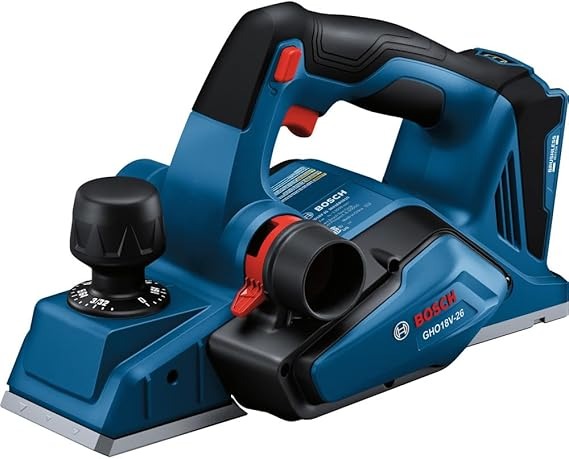
The Bosch GHO18V-26N delivers expert level cordless performance making it perfect for finish carpenters, window installers, and framers.
Powerful 18V brushless planer offering 13,600 RPM with impressive 3/32″ depth cut in single pass. Features 28-position depth adjustment, dual shaving exhaust ports, and on-tool blade storage for professional productivity.
Key Features:
- Brushless motor delivers 13,600 RPM for efficient power
- 3/32″ (2.6mm) planing depth for deeper cuts per pass
- 3-1/4″ planing width handles most projects
- 28-position depth adjustment knob for precise control
- Uniform aluminum base plate ensures flat, consistent cuts
- Dual shaving exhaust ports direct chips left or right
- Single blade changing system with no extra alignment
Pros:
- Professional-level power in cordless package
- 28 depth positions provide exceptional control
- Fast blade changes without alignment hassle
- On-tool blade storage reduces downtime
Cons:
- Higher price point at $219+ (bare tool)
- Battery and charger sold separately
- Heavier than 12V model at 5.4 lbs
Bosch GHO12V-08N 12V Max Brushless Planer
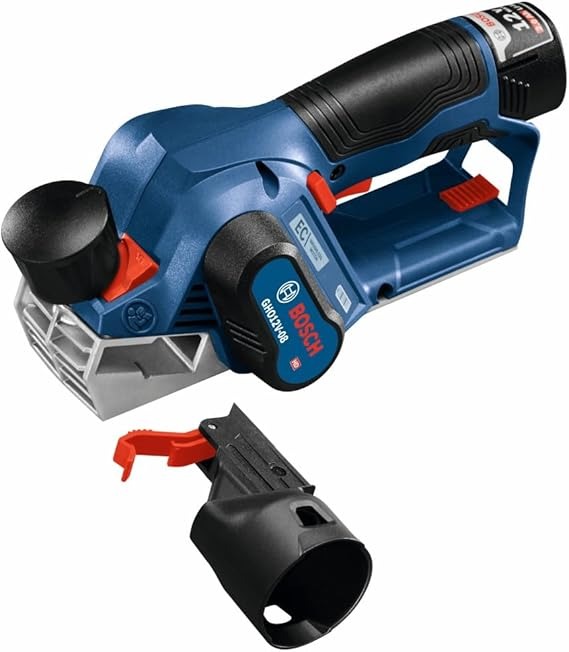
The first 12V Max planer on the market offers hand planer size with power tool performance ideal for door trimming.Compact 12V brushless planer weighing only 3.3 lbs with 2.2″ planing width. Delivers up to 33 feet of planing per amp hour in hardwood with professional 14,500 RPM speed and cordless convenience.
Key Features:
- EC Brushless motor provides 14,500 RPM
- 2.2″ planing width perfect for door edges
- 0.08″ single-pass planing depth capacity
- Creates rabbets up to 0.7″ deep
- Weighs only 3.3 lbs (tool only)
- Compact 10″ long design
- Reversible Woodrazor carbide blades (30% longer life)
Pros:
- Extremely compact and lightweight (3.3 lbs)
- Excellent runtime: 33 ft per amp hour
- Eliminates cord hassles during door fitting
- Ideal for trimming and detail work
Cons:
- Limited 2.2″ width won’t handle larger surfaces
- Shallow 0.08″ depth limits heavy stock removal
- Not suitable for heavy-duty production work
Bosch PL2632K 3-1/4″ Planer Kit with Case – Best Corded Value
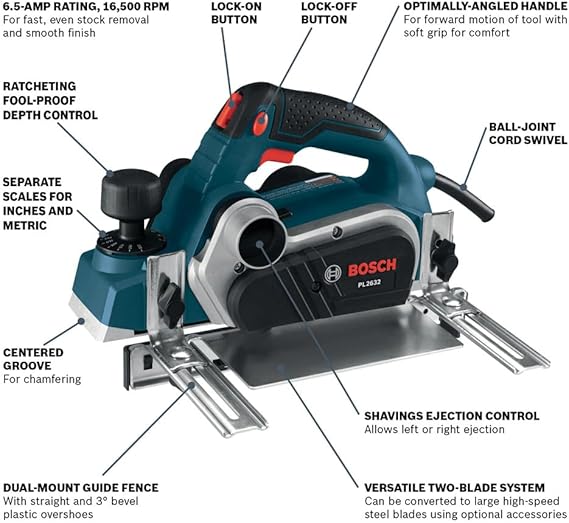
The PL2632K delivers powerful corded performance with protective carrying case making it perfect for contractors and serious DIYers. Contains 6.5-amp corded planer spinning 16,500 RPM with 3-1/4″ width capacity. Kit includes a carrying case, reversible Woodrazor carbide blades, and all essential accessories for complete planing solution.
Key Features:
- Powerful 6.5-amp motor with 16,500 RPM
- 3-1/4″ planing width handles doors and boards
- Depth adjustment from 0 to 1/16″ per pass
- Dual-mount guide fence (left or right side)
- Ambidextrous lock-off release buttons
- Ratcheting depth knob for precise control
- Reversible Woodrazor micrograin carbide blades
Pros:
- Unlimited runtime with corded power
- No battery costs or charging delays
- Consistent 16,500 RPM without power drop
- Dual-mount fence accommodates all users
Cons:
- Cord limits mobility and can tangle
- Requires power outlet access always
- Heavier than cordless alternatives at 6.3 lbs
Bosch PL1632 3-1/4″ Hand Planer – Best Budget Corded
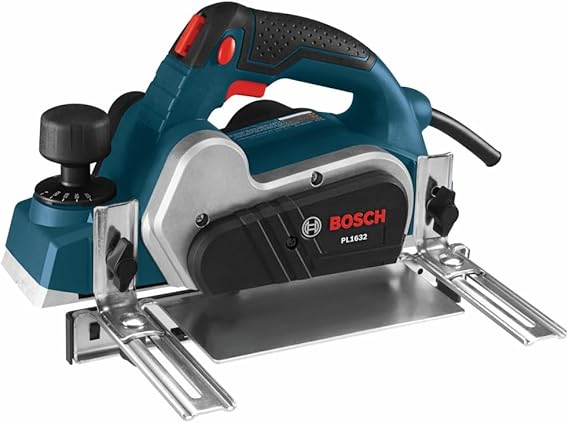
The PL1632 offers professional Bosch quality at entry-level pricing making it accessible for budget-conscious users. Affordable 6.5-amp hand planer with 16,500 RPM delivering smooth results on doors and boards. Features dual-mount fence, ambidextrous design, and essential Bosch quality without premium pricing.
Key Features:
- 6.5-amp motor provides 16,500 RPM
- 3-1/4″ planing width for versatile use
- Depth adjustment 0 to 1/16″ per pass
- Dual-mount guide fence (right or left)
- Ambidextrous lock-off release buttons
- Ratcheting depth knob with clear markings
- Reversible Woodrazor carbide blades included
Pros:
- Most affordable Bosch planer option
- Same 16,500 RPM power as premium models
- Reversible carbide blades last longer
- Spring stand protects blade and surfaces
Cons:
- Basic accessory package compared to kit version
- Lacks some premium features of higher models
- Cord restricts mobility
Conclusion
Are Bosch planers good investments for your workshop and project needs long-term? Absolutely yes for anyone valuing quality, reliability, and accurate results from their hand planers. The German engineering quality delivers consistent performance that budget alternatives simply cannot match over time. Superior build construction, comfortable design, and excellent blade quality justify the modest premium pricing. Ambidextrous features, precision depth control, and durable components make Bosch planers versatile tools for everyone. Long-term value analysis shows Bosch planers actually cost less than cheaper alternatives when considering replacement cycles.
FAQs
1.How to use a Bosch planer?
Set to a shallow depth (1/32”), start flat on the wood, and move forward steadily with even pressure for even results.
2.How to use Bosch electric planer?
Plug in the planer, set the cutting depth, start it using the lock-off and trigger, then plane with the grain for clean results.
3.How to change Bosch planer blades?
Unplug the planer, engage the park rest, remove the old blade by loosening the bolts, clean the carrier, install the new blade evenly, and hand-rotate to test.
4.How often should planer blades be changed ?
Change or reverse Bosch planer blades every 20–30 board feet for hardwoods (40–50 for softwoods), or immediately if burn marks, rough cuts, or tear-out appear.
5.How to remove Bosch planer blade?
Disconnect power, flip the planer on a stable surface, loosen the bolts, and carefully remove the blade carrier while wearing protective gloves.