
8 Reasons You Should Choose a Metalwork Lathe in 2025
According to recent industry surveys, over 67% of machinists report that inadequate tooling is their biggest productivity barrier. Whether you’re a hobbyist crafting custom motorcycle parts or a professional manufacturer producing aerospace components, precision matters.
A metalwork lathe isn’t just another tool, it’s an investment that pays dividends in accuracy, efficiency, and profitability. Modern lathes have evolved dramatically, incorporating cutting-edge automation, smart technology, and eco-friendly designs that weren’t available even five years ago.
In this comprehensive guide, we’ll explore eight compelling reasons why 2025 is the perfect time to invest in a quality lathe machine. From breakthrough precision technology to impressive cost savings, you’ll discover exactly how this versatile tool can transform your metalworking capabilities.
1. Advanced Precision Technology
Modern metalwork lathes deliver tolerances that were impossible to achieve with manual equipment just a decade ago. Today’s CNC-enabled machines routinely hold tolerances of ±0.0001 inches (±0.0025mm), making them indispensable for industries where precision is non-negotiable.
What Makes 2025 Lathes Different?
The latest models incorporate digital readout (DRO) systems that provide real-time position feedback with crystal-clear displays. These systems eliminate the guesswork that plagued older machines, reducing measurement errors by up to 90%. Aerospace manufacturers, medical device producers, and precision instrument makers rely on this level of accuracy to meet stringent quality standards.
Consider the automotive industry: modern engine components require tolerances within microns. A high-precision lathe ensures that every piston, shaft, or valve component meets exact specifications. This consistency translates directly to reduced rejection rates, some manufacturers report scrap reduction of 30-40% after upgrading their equipment.
Beyond manufacturing, jewelry makers and custom fabricators benefit enormously from precision capabilities. Creating intricate threading, complex geometries, or decorative patterns becomes not just possible but repeatable. When you can produce identical components every single time, customer satisfaction soars and your reputation for quality becomes your best marketing tool.
Real-world impact: A mid-sized machine shop in Michigan upgraded to precision CNC lathes and reported a 35% reduction in rework costs within six months, while simultaneously improving delivery times.
2. Enhanced Automation Features
Automation has revolutionized metalworking, and 2025’s lathe technology represents the pinnacle of this evolution. Features that were once reserved for industrial giants are now accessible to small shops and serious hobbyists.
Key automation capabilities include:
Programmable Operations:
Modern lathes store hundreds of machining programs, allowing operators to switch between jobs instantly. No more manual setup for repeat orders, simply load the program and press start. This capability reduces setup time from hours to minutes.
Self-Calibration Systems:
Advanced sensors continuously monitor tool wear and automatically adjust cutting parameters to maintain precision. This intelligent compensation means parts produced at the beginning of a production run match those made hours later, eliminating the quality drift that plagued older machines.
Tool Change Automation:
High-end models feature automatic tool changers (ATC) that swap cutting tools in seconds without operator intervention. A job requiring six different tools can run completely unattended, dramatically increasing machine utilization.
Smart Monitoring:
IoT-enabled lathes send real-time alerts to your smartphone or computer. Receive notifications when jobs complete, when maintenance is needed, or if errors occur. This connectivity means you can manage multiple machines simultaneously or monitor production remotely.
If you’ve been wondering, are lathes hard to use, modern automation features significantly flatten the learning curve.
3. Durability and Longevity
When investing thousands of dollars in equipment, longevity matters. Today’s quality lathes are engineered to deliver 20-30 years of reliable service with proper maintenance, a remarkable value proposition.
What Makes Modern Lathes so Durable?
Enhanced Material Construction:
Premium manufacturers use hardened cast iron beds that resist warping and maintain accuracy over decades. These aren’t lightweight hobby machine, they’re precision instruments built with industrial-grade components.
Advanced Bearing Systems:
Precision sealed bearings protect against contamination while maintaining smooth operation under heavy loads. Quality spindle bearings rated for 10,000+ hours of operation are now standard in mid-range models.
Corrosion-Resistant Components:
Manufacturers apply advanced coatings and use stainless steel or treated alloys for critical components. This protection ensures machines maintain accuracy even in harsh shop environments with coolant mist and metal debris.
Modular Design Philosophy:
Rather than requiring complete replacement when components wear, modern lathes feature modular designs. Replace a worn leadscrew or upgrade a motor without discarding the entire machine.
Real-world economics:
Consider a quality bench-top lathe costing $3,000. Over a 20-year lifespan, that’s just $150 per year, less than the monthly cost of renting comparable equipment. Factor in the avoided downtime from reliable operation, and the economics become even more compelling.
Major brands like Grizzly Industrial, Jet, and South Bend offer comprehensive warranties (5-10 years on major components) that demonstrate manufacturer confidence in their durability. These aren’t disposable tools, they’re generational investments that maintain resale value remarkably well.
4. Compatibility with Diverse Materials
One of the most valuable aspects of a quality metalwork lathe is its versatility. Unlike specialized equipment that handles only one material type, a well-equipped lathe adapts to virtually any project requirement.
Materials you can machine with confidence:
Steel Alloys: From mild steel to hardened tool steels, modern lathes handle the most common industrial materials. Variable speed control and robust motors provide the torque needed for tough materials.
Aluminum and Light Alloys: Popular for aerospace, automotive, and consumer products, aluminum machines beautifully on lathes. Higher speeds and sharp tooling produce mirror finishes without additional polishing.
Brass and Bronze: Ideal for decorative work, musical instruments, and marine applications, these materials machine easily with excellent surface finishes.
Stainless Steel: Though more challenging than mild steel, quality lathes equipped with proper tooling and coolant systems produce excellent results with stainless alloys.
Plastics and Composites: Many machinists don’t realize that lathes excel at plastics; Delrin, nylon, acrylic, and engineering plastics machine cleanly with appropriate speeds and feeds.
Exotic Materials: Titanium, Inconel, and other specialty alloys require specific techniques, but modern variable-speed lathes with rigid construction handle these demanding materials when needed.
This versatility means one machine serves multiple purposes. A job shop can switch from brass decorative components to steel automotive parts to aluminum electronic housings, all on the same lathe. For small businesses and hobbyists, this adaptability eliminates the need for multiple specialized machines.
Cross-industry applications:
- Automotive restoration: Custom shafts, bushings, and adapters
- Firearms manufacturing: Barrel threading and custom components
- Electronics: Precision housings and heat sinks
- Art and sculpture: Decorative metalwork in various materials
- Model engineering: Miniature components in brass and steel
5. User-Friendly Designs That Welcome All Skill Levels
Gone are the days when operating a lathe required years of apprenticeship. While mastery still takes practice, 2025’s machines incorporate thoughtful design improvements that make them accessible to beginners while satisfying experienced professionals.
Safety innovations that protect operators:
Emergency Stop Systems:
Large, easily accessible E-stop buttons halt all motion instantly. Modern systems include redundant safety circuits that prevent restart after an emergency stop until deliberately reset.
Integrated Guards:
Clear polycarbonate shields protect operators from flying chips while maintaining visibility. Interlock systems prevent operation when guards are open.
Soft-Start Motors:
Gradual acceleration reduces sudden jerks that could cause accidents, especially important when learning proper technique.
LED Work Lighting:
Bright, shadow-free illumination ensures you clearly see your work, reducing eye strain and improving accuracy.
Ergonomic design elements:
Today’s lathes consider operator comfort for extended work sessions. Thoughtfully positioned controls reduce repetitive strain, while adjustable-height stands allow customization for operator height. Control wheels feature ergonomic grips that reduce hand fatigue during manual operation.
Digital controls replace confusing arrays of levers and dials. Intuitive touchscreen interfaces guide operators through setup procedures with visual prompts. Many machines include built-in tutorials and reference materials accessible from the control panel.
The learning curve in 2025:
Quality manufacturers provide comprehensive resources:
- Video training libraries: Step-by-step tutorials covering basic to advanced operations
- Online communities: Active forums where experienced users help newcomers
- Digital manuals: Searchable documentation with embedded videos and diagrams
- Remote support: Some premium brands offer video call support for troubleshooting
For those concerned about the learning process, the question Are lathes hard to use? has a much more encouraging answer today than even five years ago. Modern design prioritizes usability without sacrificing capability.
Professional advantages:
Even experienced machinists benefit from these improvements. Reduced setup time, clearer displays, and intuitive controls mean less cognitive load and more focus on quality. When operators aren’t fighting their equipment, productivity increases naturally.
6. Scalability for Small and Large Projects
Whether you’re crafting custom wedding rings or producing components for industrial equipment, the right lathe scales to match your ambitions. This flexibility makes lathes one of the most versatile investments in any workshop.
For Small Projects:
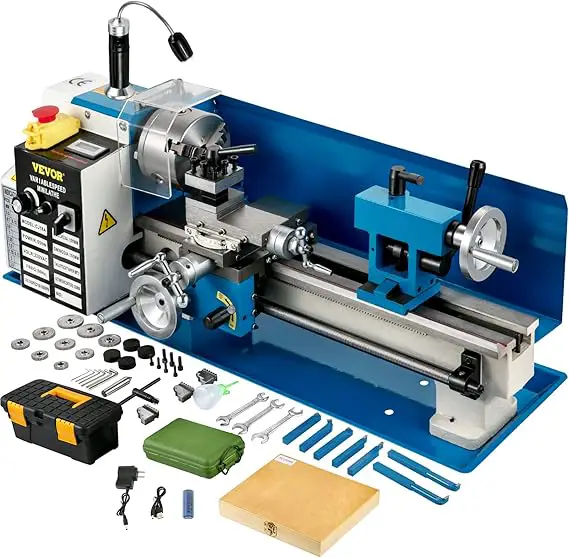
Bench-top models measuring just 24-36 inches long fit comfortably on standard workbenches while handling impressive workpieces. A quality 7×14 mini lathe can produce parts up to 14 inches long and 7 inches in diameter sufficient for most hobby projects, jewelry making, model engineering, and small repairs.
These compact machines don’t sacrifice quality for size. Modern mini lathes incorporate many professional features: variable speed control, digital readouts, quick-change tool posts, and precision ground beds. Pricing starts around $600-800 for entry-level models, with serious hobby machines in the $1,500-3,000 range.
For Growing Businesses:
Mid-size lathes (10-14 inch swing) represent the sweet spot for small to medium businesses. These machines handle production volumes while maintaining affordability. Swing capacity of 10-14 inches and center distances of 20-40 inches accommodate a wide range of commercial work.
Features expand significantly in this category: more powerful motors (1.5-3 HP), heavier construction for rigidity, and often CNC capabilities. Investment ranges from $3,000-15,000 depending on features and automation level.
For Industrial Production:
Large industrial lathes handle massive workpieces, some models accept parts over 60 inches in diameter. These production machines run continuously, producing thousands of identical components with unwavering accuracy.
Advanced CNC systems, automatic bar feeders, and multi-axis capabilities enable lights-out manufacturing. While representing significant investment ($30,000-500,000+), their productivity justifies the cost for high-volume production.
The scalability advantage:
Many manufacturers offer upgrade paths within their product lines. Start with a manual lathe, add a digital readout, later upgrade to CNC retrofit kits, each step increasing capability without replacing the entire machine. This evolutionary approach allows businesses to grow their capabilities as revenue increases.
Understanding the differences between various lathe types helps make informed decisions. For detailed comparisons, explore the distinctions between an engine lathe and a metal lathe.
7. Cost-Effectiveness Over Time: The Real ROI Story
The sticker price of a quality lathe might cause initial hesitation, but the long-term economics tell a compelling story. When you analyze total cost of ownership, lathes consistently outperform alternative solutions.
Breaking down the financial benefits:
Labor cost reduction: Automation and precision reduce the hours required per part. A job that took 20 minutes manually might take 5 minutes on a modern lathe, a 75% time savings that compounds across thousands of parts.
Material waste elimination: Precision machining means fewer rejected parts. Industry data shows shops reduce scrap by 25-40% after upgrading to modern equipment. At material costs of $50-200 per blank, this adds up quickly.
Maintenance efficiency: Quality lathes require minimal maintenance, periodic cleaning, lubrication, and occasional belt replacement. Compare this to outsourcing, where you’re paying for another company’s overhead, profit margin, and equipment costs.
Reduced outsourcing expenses: Every part you produce in-house eliminates outsourcing markup (typically 40-100%) plus shipping costs and lead time delays. For businesses producing even 50 parts monthly, the savings often justify a lathe purchase within 12-18 months.
Real-world ROI examples:
Case Study 1 – Amateur Custom Motorcycle Builder:
- Initial investment: $2,500 (quality bench-top lathe)
- Previous outsourcing: $150/month average
- ROI timeline: 16 months
- Annual savings after payback: $1,800
- 10-year value: $16,300 (savings minus initial cost)
Case Study 2 – Small Manufacturing Shop:
- Initial investment: $12,000 (mid-size CNC lathe)
- Previous outsourcing: $3,000/month
- ROI timeline: 4 months
- Annual savings after payback: $36,000
- 10-year value: $348,000
Hidden value creators:
Faster iteration: In-house capabilities enable rapid prototyping. Test designs the same day rather than waiting weeks for outsourced parts.
Quality control: Direct oversight ensures specifications are met. No more costly delays from supplier errors.
Competitive advantage: Faster turnaround and lower production costs allow aggressive pricing while maintaining healthy margins.
Revenue opportunities: Excess capacity can be monetized through contract machining, opening new revenue streams.
Sustainability savings: Modern lathes incorporate energy-efficient motors and can recycle metal chips (scrap aluminum fetches $0.50-1.00 per pound). Some shops generate $2,000-5,000 annually from scrap sales alone.
Financing and tax advantages:
Many businesses benefit from Section 179 tax deductions (up to $1,160,000 in 2025) for equipment purchases. This effectively reduces the real cost by your tax rate. Combine with manufacturer financing (often 0% for 12-24 months) and the barrier to entry drops significantly.
8. Emphasis on Sustainability: Green Manufacturing for 2025
Environmental responsibility has shifted from optional to essential. Modern metalwork lathes incorporate eco-conscious designs that reduce environmental impact while maintaining or improving productivity.
Energy efficiency innovations:
Variable Frequency Drives (VFD): Modern motors adjust power consumption based on load requirements. Rather than running at full power constantly, VFDs reduce energy use by 30-50% during light cutting operations. For a shop running multiple machines, this translates to thousands of dollars in annual savings.
LED Lighting Systems: Energy-efficient LED work lights consume 75% less power than traditional halogen systems while providing superior illumination.
Standby Modes: Smart lathes automatically reduce power consumption during idle periods, similar to computer sleep modes.
Regenerative Braking: Some high-end models capture energy during spindle deceleration and return it to the electrical system.
Material conservation:
Precision Reduces Waste: Accurate machining means more parts from each material blank. Instead of oversizing blanks to account for errors, tight tolerances allow optimal material usage.
Chip Recycling Programs: Metal chips and shavings retain significant value. Organized collection systems make recycling practical:
- Aluminum scrap: $0.50-1.00/lb
- Steel turnings: $0.05-0.15/lb
- Brass chips: $1.50-2.50/lb
- Stainless steel: $0.30-0.60/lb
A moderately busy shop can generate $3,000-8,000 annually from scrap sales, revenue that offsets operating costs while diverting material from landfills.
Coolant and lubricant management:
Minimum Quantity Lubrication (MQL): Modern systems use micro-mist lubrication, reducing coolant consumption by 90% compared to flood cooling. This cuts coolant costs, disposal expenses, and environmental impact.
Closed-Loop Coolant Systems: Filtered recirculation systems extend coolant life from months to years, reducing hazardous waste generation.
Biodegradable Options: Vegetable-based cutting fluids perform comparably to petroleum products while being safer for operators and the environment.
Long-term environmental impact:
Equipment Longevity: A 20-30 year lifespan means fewer machines in landfills. Compare this to disposable consumer products requiring replacement every 3-5 years.
Repair vs. Replace Philosophy: Modular designs enable component replacement rather than complete machine disposal. When a motor fails after 15 years, replace just the motor, not the entire lathe.
Meeting customer expectations:
Environmental certifications increasingly influence purchasing decisions. Businesses demonstrating sustainable practices appeal to conscious consumers and qualify for green certifications. Some government contracts now require environmental compliance documentation.
Regulatory compliance:
Anticipating stricter environmental regulations, investing in efficient equipment now protects against future compliance costs. Many jurisdictions offer tax incentives, rebates, or accelerated depreciation for energy-efficient equipment.
FAQ’s
- How Much Does A Quality Metalwork Lathe Cost In 2025?
Pricing varies significantly based on size and features:
- Entry-level mini lathes: $600-1,500 (7-9 inch swing, manual operation)
- Serious hobby/small business: $1,500-5,000 (10-12 inch swing, digital readouts)
- Professional manual lathes: $5,000-15,000 (12-14 inch swing, premium features)
- Entry-level CNC lathes: $8,000-25,000 (basic automation, touchscreen controls)
- Production CNC systems: $25,000-100,000+ (advanced automation, high-speed machining)
Remember to budget for tooling (cutting tools, chucks, centers)—typically 15-25% of machine cost and potential installation or electrical work.
- What’s The Best Lathe For Beginners?
For newcomers, we recommend 8-10 inch bench-top lathes with these features:
- Variable speed control (easier than gear changes)
- Digital readout for the cross-slide (improves accuracy while learning)
- Quick-change tool post (simplifies tool changes)
- Clear instruction manual and video resources
Popular beginner-friendly brands include Grizzly G8688 (mini 7×12), Jet BD-920W, and Shop Fox M1015. Expect to invest $800-2,000 for a quality starter machine.
- How Do Metal Lathes Differ From Wood Lathes?
While both rotate workpieces against cutting tools, metal lathes feature:
- Much heavier construction for rigidity during metal cutting
- Lower speed ranges (50-2,500 RPM vs. 500-4,000+ RPM for wood)
- Precision slides and cross-feeds for accurate dimensional control
- Tool posts designed for carbide and HSS cutting tools
- Coolant systems to manage heat during metal cutting
Wood lathes prioritize speed and simplicity, while metal lathes emphasize precision and rigidity. For detailed comparisons, see our guide on engine lathe vs. metal lathe differences.
- Can I Use A Metalwork Lathe For Wood Turning?
Yes, with some considerations. Metal lathes work excellently for wood turning because:
- Rigid construction eliminates vibration
- Precise speed control offers excellent surface finishes
- Lower speeds prevent burning of dense hardwoods
However, wood turning generates significant dust, so protect precision components with covers. Also, metal lathe tool rests differ from wood lathe designs you may want to fabricate custom rests for wood turning tools.
- What Maintenance Do Lathes Require?
Regular maintenance is straightforward:
Daily (if used regularly):
- Wipe down ways and exposed precision surfaces
- Remove chips and debris
- Check oil levels
Weekly:
- Lubricate moving parts per manufacturer specifications
- Inspect belts for wear
- Clean chip tray
Monthly:
- Thorough cleaning of all surfaces
- Check and adjust gibs if needed
- Inspect tooling for wear
Annually:
- Professional calibration check
- Replace way oil and other lubricants
- Inspect electrical components
With proper care, quality lathes require minimal repair and maintain accuracy for decades.
- Do I Need Three-Phase Power For A Lathe?
Most residential and small shop lathes run on standard 120V or 240V single-phase power. Three-phase power is typically required only for:
- Industrial machines larger than 3-5 HP
- Older used equipment from commercial facilities
Options if you want a three-phase machine:
- Phase converter: Converts single-phase to three-phase ($300-1,500)
- VFD (Variable Frequency Drive): Modern solution providing phase conversion plus variable speed ($200-800)
- Electrical service upgrade: Installing three-phase service ($3,000-8,000+ depending on location)
For most hobbyists and small shops, single-phase machines provide all needed capability without power complications.
- How Long Does It Take To Learn Lathe Operation?
Basic competency: 10-20 hours of practice
- Safe operation procedures
- Simple turning operations
- Basic facing and drilling
Intermediate skills: 50-100 hours
- Threading
- Taper turning
- Tool grinding and optimization
- Multiple operation sequencing
Advanced proficiency: 500+ hours
- Complex geometries
- Precision to tight tolerances
- Efficient programming (for CNC)
- Troubleshooting and optimization
Modern user-friendly designs significantly accelerate learning. Many beginners produce useful parts within their first few hours. Online communities, video tutorials, and manufacturer resources make self-taught learning very achievable.
Make Your Decision: Why 2025 Is the Perfect Time to Invest
The metalworking landscape has never been more favorable for lathe investment. Technology has matured to deliver professional capabilities at accessible prices, while automation features that once cost tens of thousands now come standard on mid-range machines.
Your next steps:
- Define your requirements: What materials will you work with? What size parts? What tolerances do you need?
- Set your budget: Consider total cost including tooling, installation, and training—not just the machine price.
- Research specific models: Read reviews, watch video demonstrations, and join user forums for real-world experiences.
- Consider used options: Quality used lathes retain value well and can offer premium features at reduced prices—just ensure thorough inspection.
- Plan your workspace: Verify floor space, electrical requirements, and access for delivery before purchasing.
- Invest in training: Budget time and resources for proper training—skilled operators maximize any machine’s potential.
Whether you’re a hobbyist ready to elevate your craft, an entrepreneur building a business, or an established shop upgrading aging equipment, modern metalwork lathes deliver exceptional value. The combination of precision, automation, durability, and sustainability makes them essential tools for anyone serious about metalworking.
The question isn’t whether you need a lathe, it’s which model best fits your journey.